
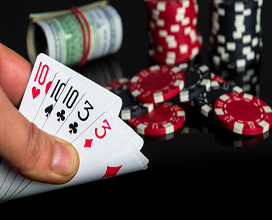
5 Poker Strategies Every Player Should Know
Poker is not simply about getting good cards.
Strong players learn how to make better decisions with both strong and weak hands by understanding position, betting patterns, probabilities, opponents, and discipline.
While poker strategy can become extremely advanced, several fundamental concepts can immediately improve the way most players approach the game.
Here are five strategies every poker player should understand.
1. Understand the Power of Position
Position is one of the most important concepts in poker.
Your position determines when you act during a betting round.
Players who act later have an advantage because they get to see what other players do first.
For example, imagine you are sitting near the dealer button.
Several players check before the action reaches you.
That information may indicate weakness and create an opportunity to bet.
Compare that with acting first.
You must make your decision without knowing what the players behind you intend to do.
Because of this advantage, players can generally play a wider range of hands from later positions.
Practical Tip
Play tighter from early position and gradually expand your starting range as you move closer to the dealer button.
This simple adjustment can prevent many difficult situations.
2. Play Fewer Hands, but Play Them Well
One of the most common beginner mistakes is playing too many hands.
Poker can become boring when you repeatedly receive weak cards, so players sometimes convince themselves to play hands they should fold.
That usually creates problems.
Weak starting hands often produce difficult post-flop decisions.
Instead, become comfortable folding.
Wait for stronger situations and play those hands decisively.
Being selective does not mean playing passively.
You can still play aggressively once you decide to enter the pot.
Quality Over Quantity
A disciplined player may fold for several hands before finding a strong opportunity.
That patience is one of the characteristics that separates recreational decisions from strategic ones.
Poker culture often reflects that patient, focused style too. Something as simple as a comfortable poker cap can become part of a player’s regular table routine, but what matters most is maintaining discipline regardless of what you are wearing.
3. Pay Attention to Your Opponents
Your cards are only part of the information available.
Watch how your opponents play.
Ask questions such as:
- Do they play many hands?
- Do they raise frequently?
- Do they usually call instead of raising?
- Do they become more aggressive after losing?
- Do they only make large bets with strong hands?
These observations help you build a general picture of each player’s tendencies.
You are not trying to read minds.
You are gathering information and using patterns to make better decisions.
Adapt Your Strategy
Do not play exactly the same way against every opponent.
Against someone who folds frequently, aggression may work well.
Against a player who calls almost everything, bluffing becomes less attractive.
The ability to adjust is an important poker skill.
4. Think About Ranges, Not Just Individual Hands
Beginners often try to guess one exact hand.
For example:
“He must have pocket aces.”
Experienced players think differently.
They consider a range of possible hands.
Based on the player’s position, pre-flop action, flop bet, and later decisions, what combinations could reasonably make sense?
Perhaps the opponent could have:
- A strong pair
- Two pair
- A draw
- A set
- A bluff
Thinking in ranges gives you a more realistic way to analyze situations.
You will rarely know exactly what someone holds.
The goal is determining what group of hands they could reasonably have.
5. Know When to Fold
Folding is one of the most underrated skills in poker.
Players naturally want to see whether they were right.
That curiosity can become expensive.
You may have started with a strong hand, but poker changes as community cards appear and opponents continue betting.
If the evidence strongly suggests that you are beaten, folding can be the correct decision.
Good players do not become emotionally attached to their cards.
They continually reevaluate the situation.
Protect Your Stack
You do not need to win every pot.
Sometimes protecting your chips is more important than trying to prove that your original hand was strong.
Remaining patient also means staying physically and mentally comfortable during long sessions. Keeping something like a poker water bottle nearby can help you stay hydrated without constantly leaving the table.
Bonus Strategy: Control the Size of the Pot
Not every hand needs to become a massive pot.
Think about the strength of your hand relative to the situation.
With extremely strong hands, you may want to build the pot.
With medium-strength hands, keeping the pot smaller can sometimes reduce risk.
The amount you bet should have a purpose.
Ask yourself:
What am I trying to accomplish with this bet?
Are you trying to gain value?
Make weaker hands fold?
Protect your hand?
Gather information?
If you cannot explain why you are betting, it may be worth reconsidering the decision.
Strategy Requires Discipline
Knowing poker strategy and following poker strategy are two different things.
You may know that a hand should be folded but still call because you are curious.
You may understand bankroll management but increase stakes after a loss.
You may recognize that you are tired but continue playing anyway.
Improvement comes from turning knowledge into consistent behavior.
Keep Learning
Poker is a game that rewards continuous learning.
The fundamentals create the foundation, but there is always more to study.
Review hands.
Watch experienced players.
Study betting patterns.
Think about ranges.
Learn from mistakes.
Most importantly, make decisions based on logic rather than emotion.
The more disciplined your approach becomes, the more opportunities you give yourself to make profitable decisions over the long run.